In my mind, I had romantic visual plans for today. I would walk to the park as the first light of Winter Solstice filtered through the trees. The wreath of pussytoes I had created this spring summer would be displayed on the sparse covering of sparkling snow. From there, an airy breeze would lift the seed puffs and disperse them to become future native seedlings living again within their natural habitat. And I would photograph the experience artfully.
Instead, I have just awoken from a noon day nap. The weather app is still clocking in at a sunny and more reasonable -16ºC. The flu/cold I contracted shortly after last week’s dramatic morning-recess-supervision-during-a-snow-squall, is starting to subside, and the only artful thing I have created today is to make myself a sandwich. The bread was stunning both visually and gastronomically; however, you will have to take my word for it. To photograph it now would be suspect: just a plate of crumbs and one small triangle of spinach (by now even that has disappeared).
I am grateful to have this day stretch out slowly, even in its natural light shortness. My memory is stumbling and it is comforting to have a record of terrestrial activities to ground me in the idea that somewhere in my mind, there is a crumb of creativity ready to spring forth and visually express itself again.
And the wreath? Maybe it will show up here again sometime. But not today. There is too much snow right now to think that seeds would make contact with the ground anyway – perhaps future food for a critter instead?
(I see that now I have the option to improve this post with AI. I did not. The only literary crutch I used was a dictionary and thesaurus.)
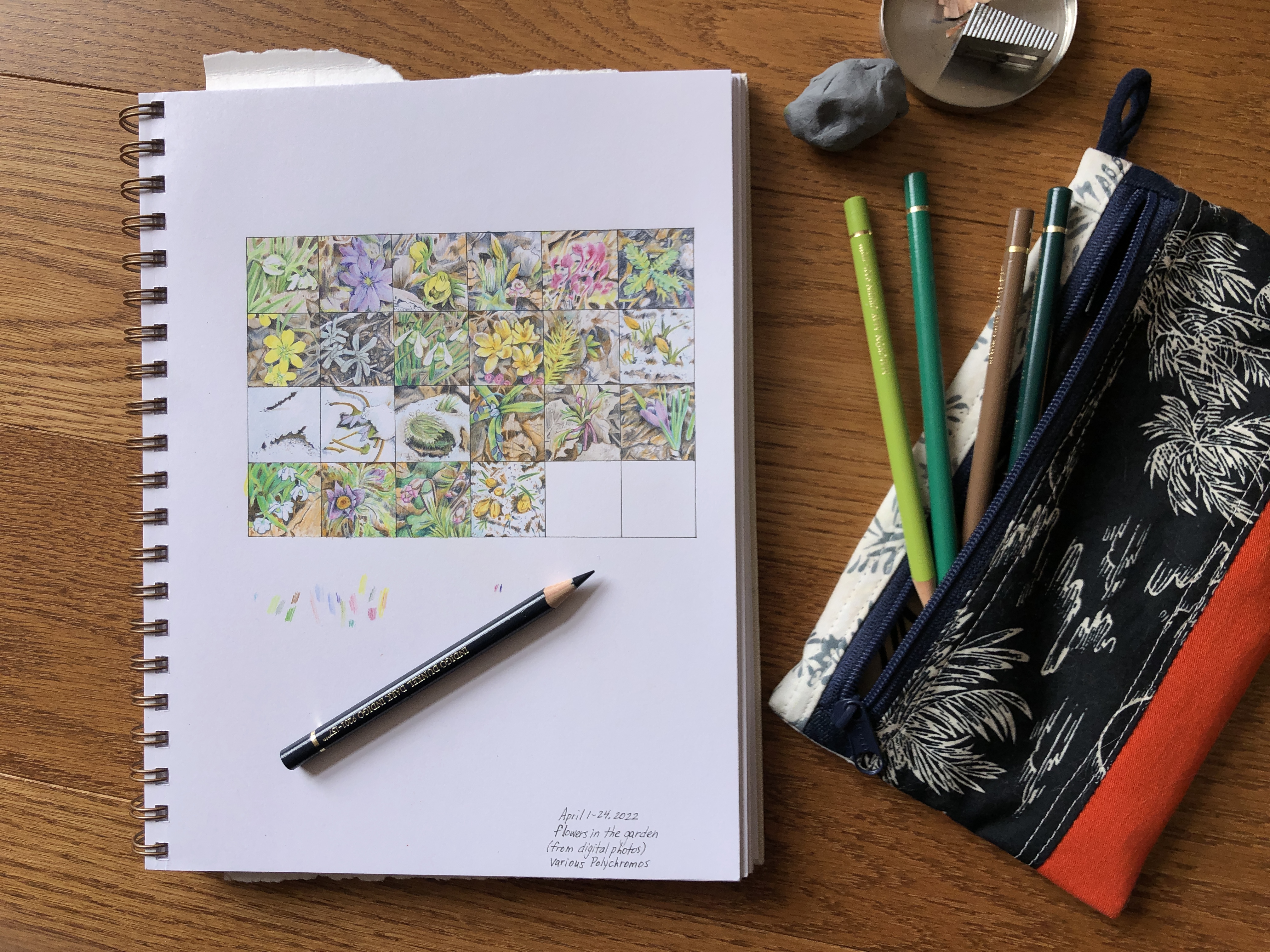
The sketchbook where I am keeping my 24 Days of Drawing studies. Pencil case by Verna Vogel. Photograph B. Wanhill 2022.
I started reading The Barren Grounds last weekend and almost immediately was triggered not by the Indigenous content but by references to art within an educational setting. Please read the book if you are so inclined – I will not get into the details of the story but it is wonderfully written by David A. Robertson and as it is a Kid Lit. novel, fairly easy reading.
As a child I drew… made things, but the story that has played in my mind for over 4 decades is that formal art making was really an escape mechanism for me to deal with being physically and mentally humiliated by my friends on a fairly regular basis starting in elementary school. It became my tool for some social preservation with my more academically inclined peers as I moved through the public education system.
By grade 10, you could find me firmly entrenched in the art room at any point when I did not have to be in another class and my teacher fostered that feeling that this had become part of my identity. This was so much the case that when I was invited to join a class for honours students and I asked if I could major in something else besides art, my teacher reminded me that art was why I was asked to join.
I continued on and worked hard to live up to the gold standards of realism that seemed to be the hallmark of a real artist and I always felt there was something quite forced about what I was doing – something I didn’t understand that came naturally to others who drew all the time.
Nevertheless, that continued hard work ethic I learned from my family, art scholarships and the offerings of job opportunities in creative work (parks and recreation leader, graphic artist, picture framer/gallery attendant, history of art slide monitor, illustrator) helped me continue down the path in visual art without thinking there could really be anything else.
Eventually, I became an educator and have now been working 18 of almost 20 years in a charter school system as an elementary art specialist.
The baggage I carry as an art teacher is the memories of my own childhood and why I created art, why I chose to try to create a specific kind of art and why I couldn’t let go of that way of working.
As a teacher, in class, I intentionally keep my demos short, I encourage students to create art in the way they want to and perhaps, unfortunately, I don’t push students with skill for realism to go further with what they are doing because I worry it will feed a perfectionist tendency and perpetuate the idea that “good art” takes a lot of time and is realistic looking.
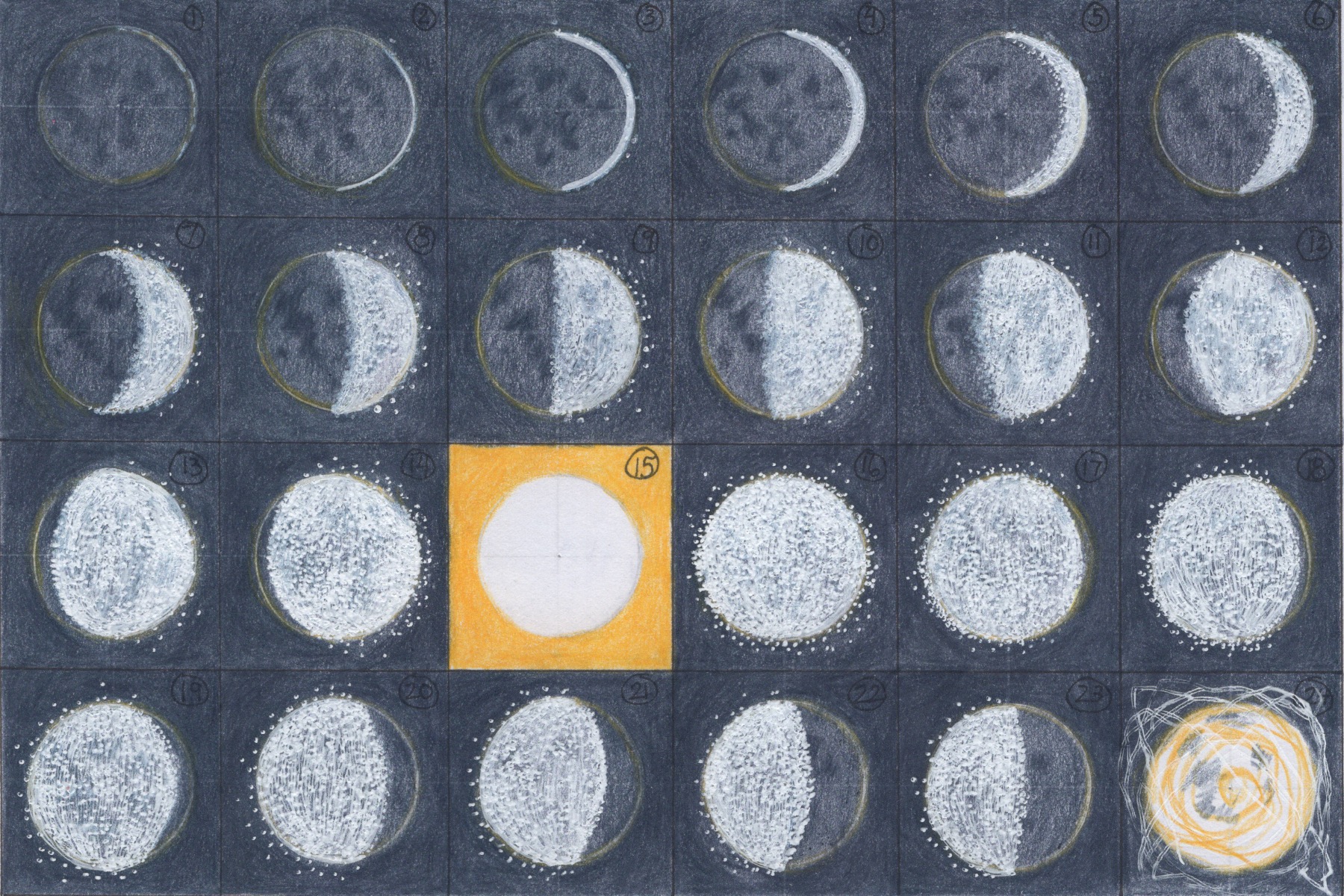
This 24 Days of Drawing practice I have set for myself has allowed me to be aware of how I am feeling when I make a mark. I am practicing not worrying about whether the proportions are correct or the image is cohesive. Working on 1″ x 1″ a day also fits into a time frame that is realistic for me in a life that I have built with another that includes other pursuits not related to visual art. I am keeping skills up, but more importantly, I am learning to explore what it means to communicate something visually in a mentally healthy way. I think this is something valuable I can pass on to my students.
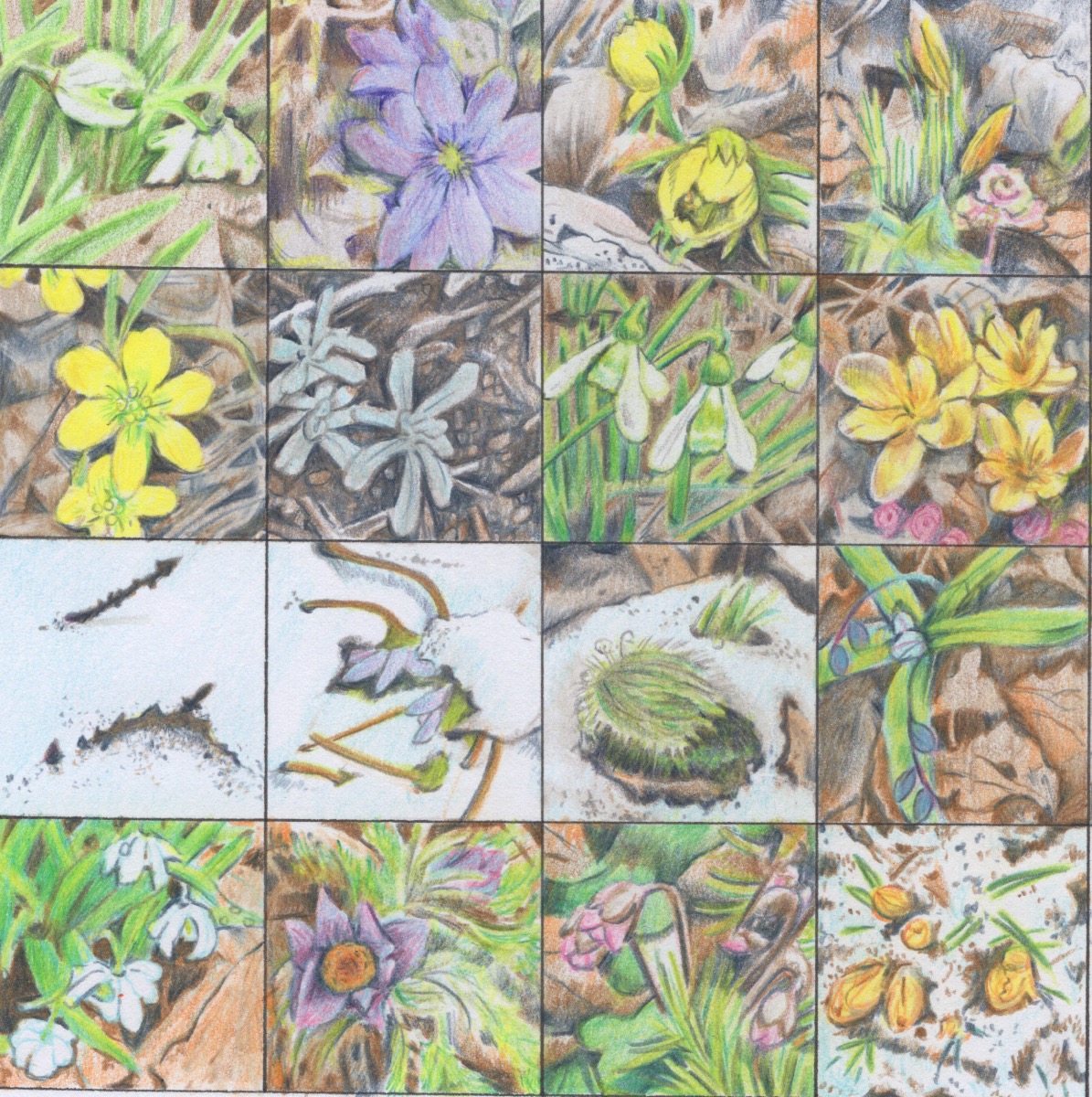
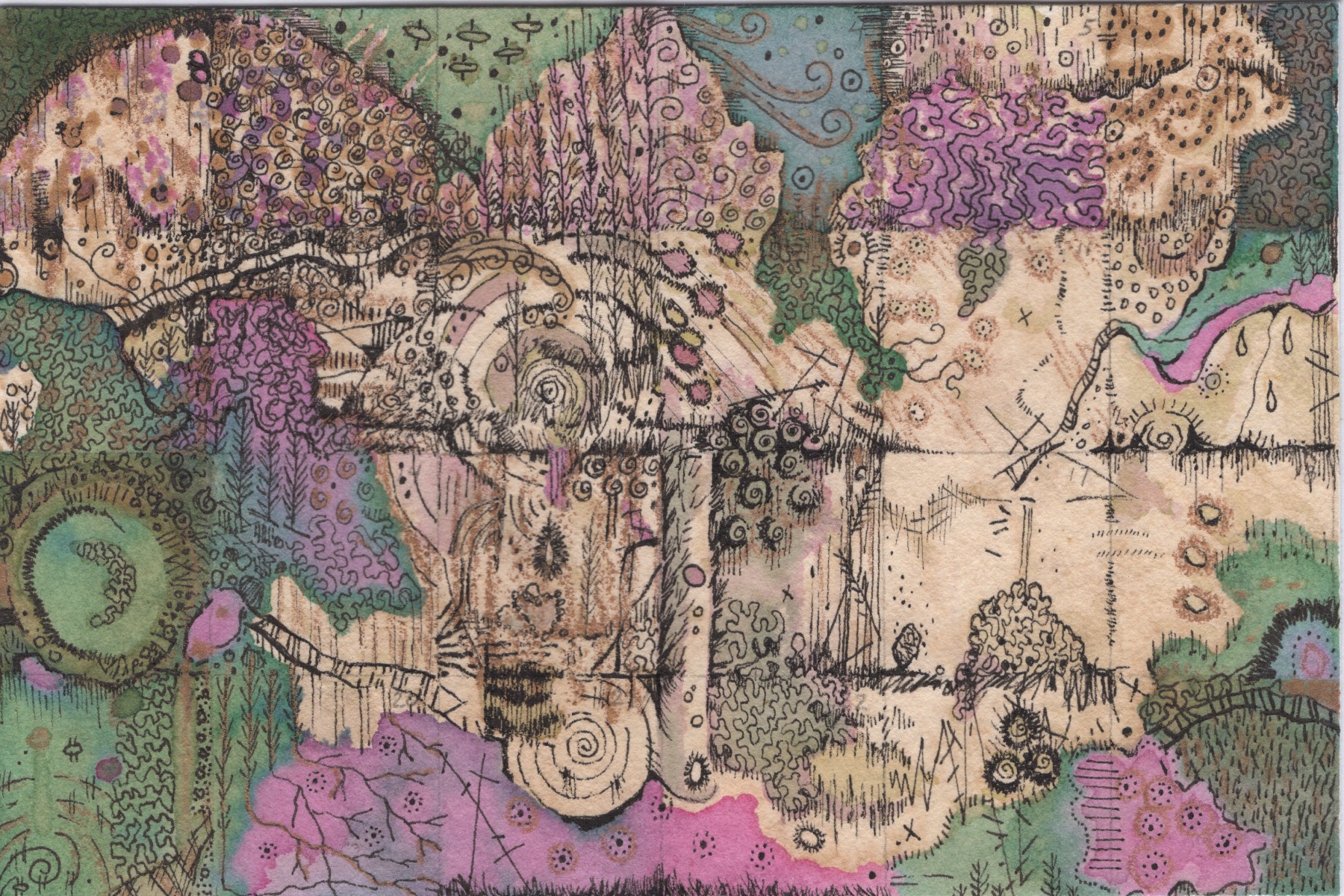
April 24 Days of Drawing (wip). Pencil crayon work from digital photos of my garden. B. Wanhill, April 2022.March 24 Days of Drawing. Plant inks and Sakura Micron pens. B. Wanhill, March 2022.February 24 Days of Drawing. My dad’s geometry set, pencil crayon, white gel pen. B. Wanhill, February 2022.
 quietly creating